

SOS Framework

With more than 1.8 million registered charities in the United States alone, and millions more worldwide, choosing where to donate is a tough call. The SOS framework offers a simple and accessible way to estimate the impact of different cause areas.

The framework in a nutshell

To compare the impact of different charities, we recommend evaluating the cause area they are operating in with the SOS framework: is it sizeable, overlooked, and solvable? If the answer is yes to each, a well-run charity in that area will likely do many times more good than the average charity.

Sizeable
How many human or non-human lives does the problem affect? Bigger problems have a bigger ceiling on how much good you can do.
Overlooked
How much attention and funding is there already? When a cause area is neglected, funding is likely to be more impactful compared to a cause area that is well-funded.
Solvable
How easy is it to make a difference? If a problem has no workable interventions, extra funding won’t help.
The causes we hear the most about are precisely those where it will be harder to make a big difference; the causes that get less attention are those where we may be able to have a massive impact.
William MacAskill, Doing Good Better
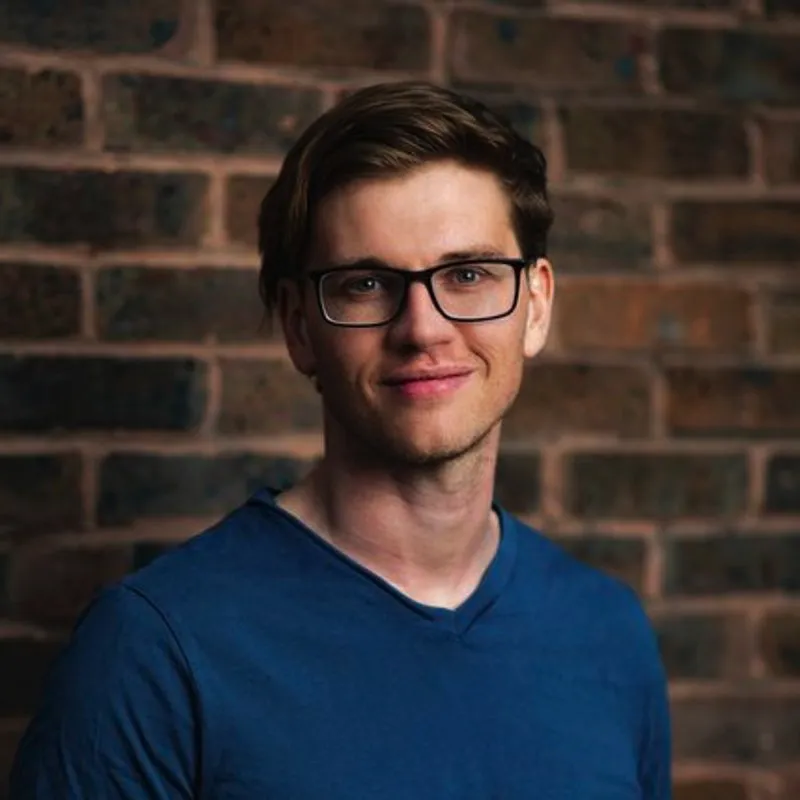
Portrait of William MacAskill, co-founder of Giving What We Can.

A practical example

To better understand how the SOS framework works, let’s look at two examples: malaria and cancer. Malaria and cancer both cause enormous suffering, and on size alone, cancer looks like the obvious choice. But by looking through the lens of the SOS framework, we can see that malaria is usually a much better opportunity for impact.

Malaria

SizeableLarge

Kills 610,000 people a year, most of them children under five in sub-Saharan Africa (WHO). That’s enormous, though cancer’s death toll is larger still.

OverlookedUnderfunded

In 2024 the world spent about $3.9 billion fighting malaria, less than half the $9.3 billion the World Health Organization (WHO) says is needed, a gap that has widened for years.

SolvableHigh

Malaria interventions are cheap and highly effective. A bed net costs about $6 to deliver, and around $5,000 of malaria prevention can save a life (GiveWell).

Smaller than cancer, but far more overlooked and highly solvable, so each dollar goes much further. That’s where organisations like the Against Malaria Foundation work, and a big part of why independent evaluators rate distributing bed nets so highly.

Cancer

SizeableVery large

Kills close to 10 million people a year worldwide, roughly 16 times malaria’s death toll (WHO). On size alone, cancer looks like the place to work.

OverlookedWell funded

One of the best-funded areas of medicine. Over $250 billion a year is spent on cancer medicines alone (IQVIA), nearly 64 times the funding for malaria.

SolvableMixed

Public and philanthropic funders pour more than $6 billion a year into cancer research (The Lancet Oncology). Progress is real but slow, and how solvable it is depends heavily on the type of cancer.

By scale, cancer is the larger problem. But the fact that it is already well-funded and that the interventions are complex and expensive means that additional funding is likely to have a smaller impact overall in comparison to other high-impact causes.

Why does this matter?

If funding for charities were unlimited, prioritising wouldn’t matter: every problem could be worked on at once. In reality, global giving is a limited pool of money. The same donation can do far more good in one cause area than in another, so directing funding towards the strongest opportunities increases how much good we do overall.

Isn’t reality more complex?

Like all frameworks, the SOS framework simplifies the real world. Although cancer scores low as a cause area overall, a specific, neglected line of cancer research could still be an excellent giving opportunity. Use SOS as a starting point for comparing causes, not the final word on any charity. To see what a researcher-led evaluation looks like in depth, read GiveWell’s evaluation of insecticide-treated nets.

A closer look at the principles

In his 2018 TED Talk, our co-founder William MacAskill used the same model under a different name (Importance, Tractability, and Neglectedness) to ask which of the world’s problems deserve our attention most. Since 2018, the field of effective giving has grown and developed but the core principles remain the same.

William MacAskill, “What are the most important moral problems of our time?” (TED2018).

See SOS applied to our recommended causes

Global health, animal welfare, and reducing catastrophic risks each score well on SOS, in different ways.

Compare cause areas