A visit to Ansh in India
A first-hand view of Kangaroo Mother Care in Rajasthan
I didn’t expect the quiet.
I had just stepped into Bharatpur’s district hospital wards in Rajasthan, where Ansh operates. The air smelled faintly of antiseptic and the walls were painted a faded mint green. But it wasn’t the colours or the smells that struck me, it was the silence. Not the calm of sleep, but the fragile stillness of newborns too small, too underweight, born too early to cry.
On a plastic chair sat Saanvi (name changed). One of her twins rested against her chest, skin-to-skin, guided by one of the Ansh nurses. Her other newborn was in the intensive care unit.
I asked how much the baby on her chest weighed.“1,200 grams”, she said. That’s less than a third of what I weighed when I was born.
I looked from the tiny newborn wrist, and back to Saanvi. She is 18 years old, and holding a new fragile life, giving it a fighting chance.
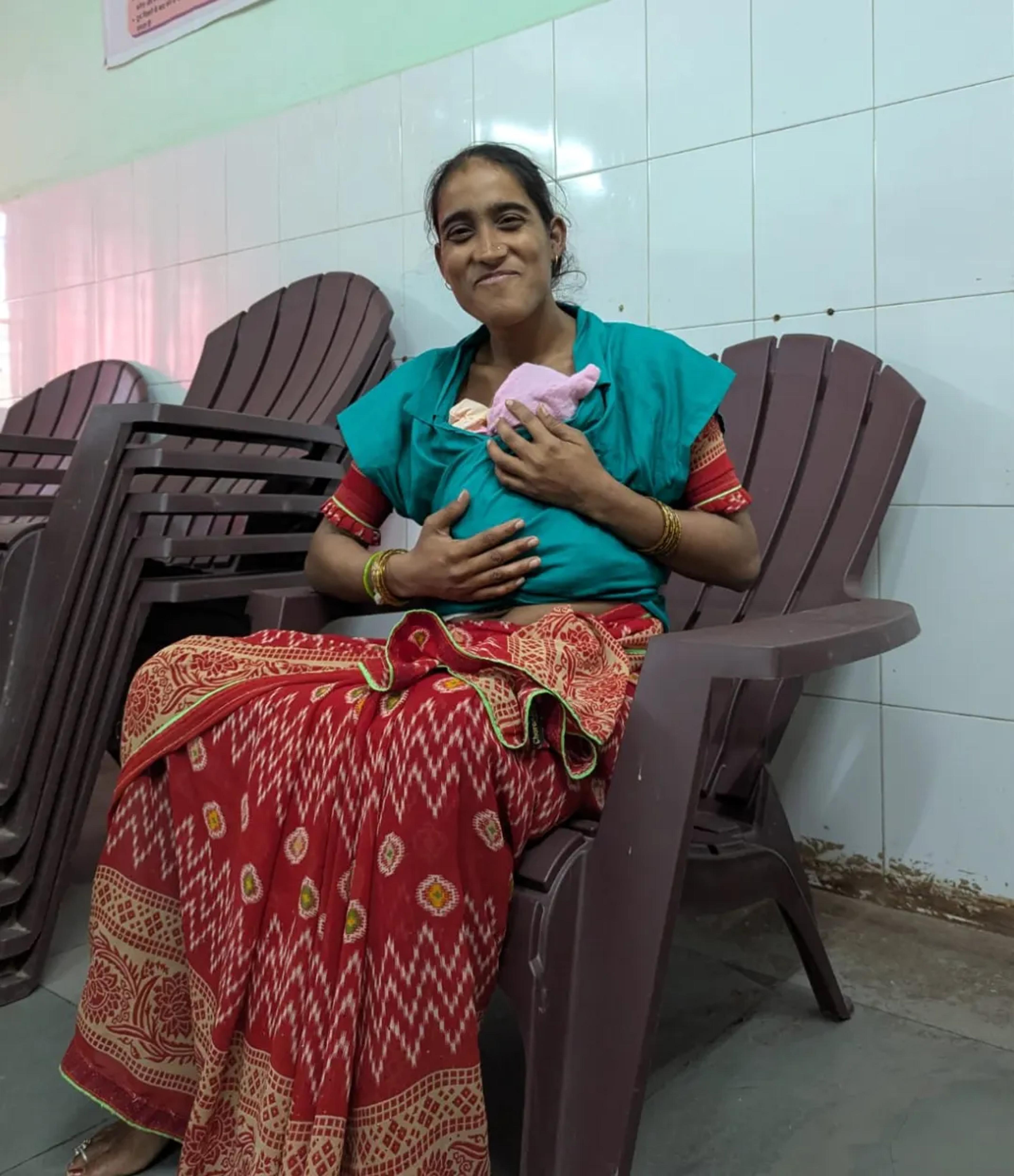
Saanvi, 18, holds one of her twins to her chest
The stakes
Globally, 2.4 million babies die in their first month of life each year. About 22% of those deaths occur in India alone, mostly among premature or low-birth-weight infants. And yet, the solution, Kangaroo Mother Care (KMC), is astonishingly simple: prolonged skin-to-skin contact, breastfeeding support, and careful monitoring. Evidence shows it can reduce mortality by a third.
The challenge isn’t knowledge. Hospitals and governments know that KMC works. The challenge is resources: staff shortages, crowded wards, and pressures to discharge the women and their babies too soon. Without support, KMC remains an unrealised government target, and babies that easily could have survived, die.
A proven solution
Ansh works inside government hospitals to make KMC a reality. In the ward we visited, Ansh-trained nurses carefully explained KMC to the new parents and their extended relatives who had come to welcome a new member into their family. Every four hours the nurses check vitals, support breastfeeding, monitor for danger signs, and ensure the babies stay warm from KMC. Their work is constant, but they clearly see the impact they are able to have.
Neha, one of the nurses, told me, “What I love most about my job is identifying a baby in danger and helping them survive. But the hardest part is when we do everything we can with the resources we have and some babies still don’t make it”.
Ansh also ensures follow-up calls are made after discharge, delaying critical discharges when needed, and providing ongoing support to new mothers who may be malnourished or struggling to produce enough milk.
The wider impact
Even for those babies that would have survived without KMC, keeping them warm and regulating their fragile heartbeat with KMC helps avoid lifelong health complications. When these babies survive it gives their families hope. As Supriya, the founder of Ansh, said:
“Honestly, what keeps me going is the young women. They give so much of themselves and their love to their tiny babies and it’s heartbreaking to see someone lose something so precious to them”.
In this ward alone, 15-20% of babies are eligible for KMC, roughly 150 each month. Ansh is now fundraising to expand to new states. Moni, Ansh’s COO, explained that when they enter a new hospital, the change in mortality rate for the newborns is instant. From the very first day, Ansh sees babies who would likely have died without KMC, surviving because underweight infants are identified early and monitored for hypothermia and other complications
Reflections
I left the hospital feeling humbled and inspired. The nurses’ dedication, the mothers’ courage, and Ansh’s systematic approach showed me how a simple, evidence-based intervention could save and change lives.
As we drove away, the sound of traffic slowly replaced the stillness of the wards. But the image of Saanvi holding her tiny baby, giving it warmth and life, stayed with me. This is what it means to transform health outcomes at scale. And it reminded me why supporting effective interventions, like Ansh, makes the difference between life and death.
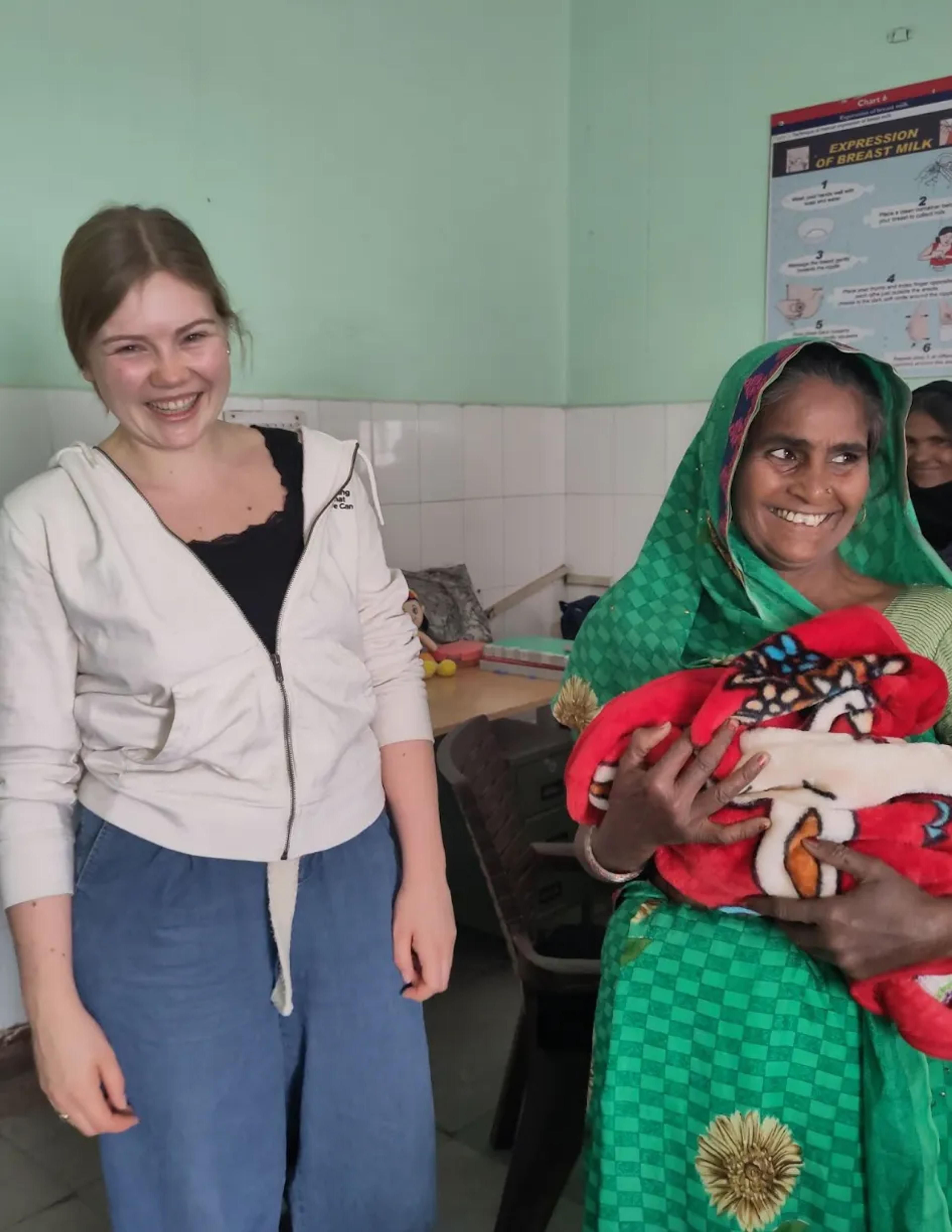
Amalie stands next to Padma (name changed), holding her new grandchild.
Notes:
Everyone who features, or whose child features, in this article has given their informed consent in advance of publishing. We’ve just onboarded Ansh as a supported programme on our donation platform.