Water, Sanitation and Hygiene (WASH)
Giving What We Can no longer conducts our own research into charities and cause areas. Instead, we’re relying on the work of organisations including J-PAL, GiveWell, and the Open Philanthropy Project, which are in a better position to provide more comprehensive research coverage.
These research reports represent our thinking as of late 2016, and much of the information will be relevant for making decisions about how to donate as effectively as possible. However we are not updating them and the information may therefore be out of date.
Read our latest water, sanitation and hygiene research here.
Inadequacies in the area of water, sanitation and hygiene (known collectively as WASH), are responsible for a huge number of health problems throughout the developing world. Today, a significant proportion of the world’s population are without access to safe drinking water and basic sanitation facilities.
The most significant of the health problems attributable to this state of affairs is the prevalence of diarrhoeal disease, which is the second biggest cause of death amongst children under five (killing 760,000 every year) . Furthermore, there is growing evidence that improvements in water, sanitation and hygiene (WASH) may have many other significant impacts on health. The most important of these is the possible role of improved WASH in reducing rates of acute respiratory infections (ARIs), which kill 1.2m more children annually than diarrhoea . Moreover, there is ongoing research into the non-health benefits of these improvements, such as improved education and gender equality.
Improvements in WASH therefore have the potential to reduce the rates of some of the leading worldwide causes of suffering. There is no doubt that the provision of satisfactory WASH to the developing world would significantly improve living standards and health, as it has done historically in today’s developed countries.
There is no question about the magnitude or urgency of the problems which could be addressed by WASH programs. Our research has been an attempt to discover whether WASH is an area within which we should search for cost-effective interventions, and charities which can implement them.
Water, Sanitation, and Hygiene programs (commonly referred to as ‘WASH’) come in two broad classes.
Promotion Programs
Promotion programs are those which focus on educating individuals about hygiene and sanitation practices. Broadly speaking, such interventions are significantly less costly than construction programs. Such programs have been implemented fairly widely (in Africa, Asia and South America), and have long formed part of holistic WASH programs, but research into the area is scarce. The Department for International Development’s (DfID) 2013 Evidence Paper (see section below ‘DfID’) claims that the project of designing evidenced-based hygiene interventions, began only in 1991.
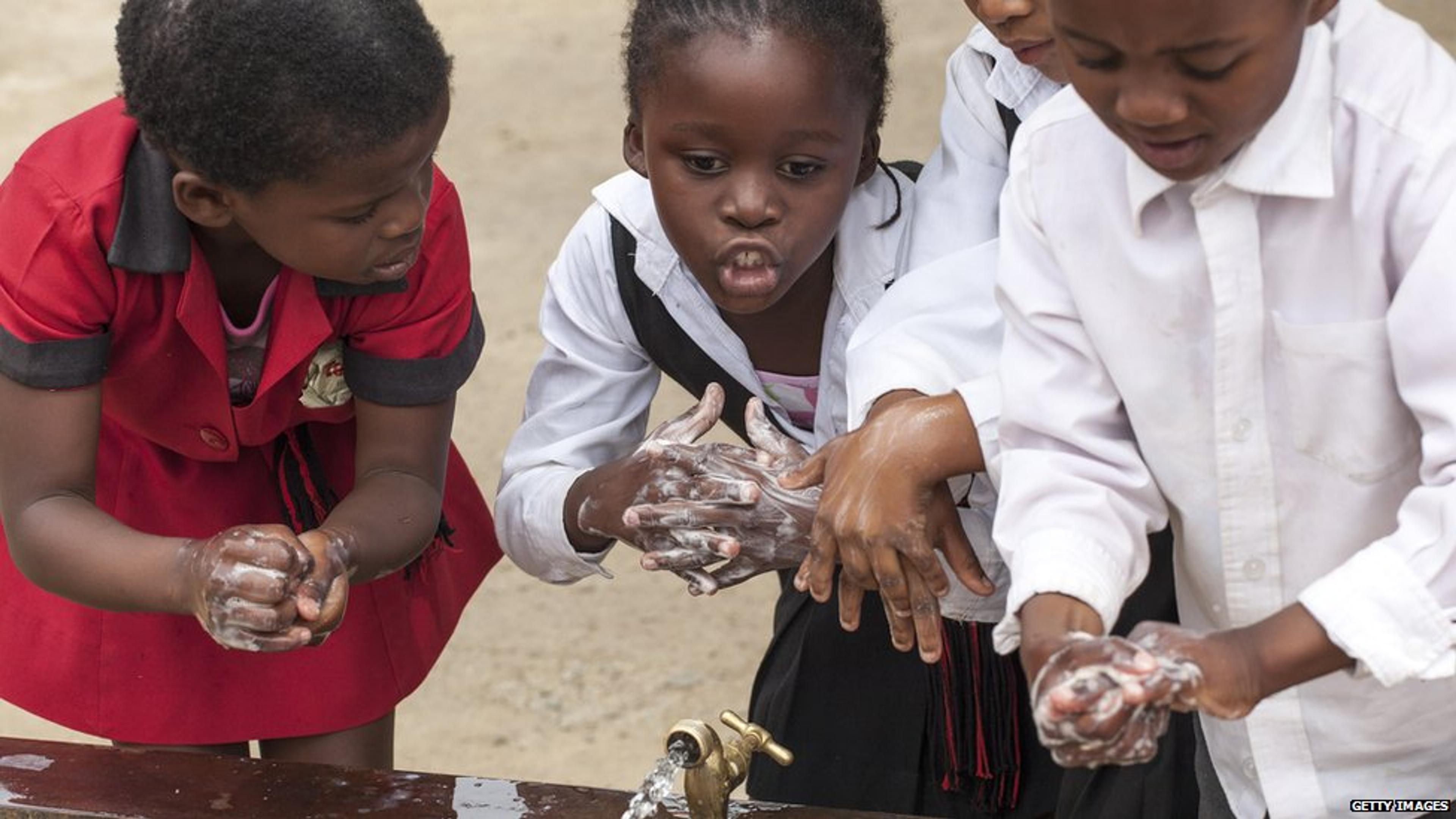
Currently, promotion programs focus primarily on educating populations about proper hand-washing techniques and how to properly dispose of excrement. In particular, efforts are concentrated on encouraging individuals to wash their hands with soap at important points in the day (e.g. after going to the toilet, before preparing food). Such interventions are very easy to understand, to the extent that it might seem obvious that they are highly cost-effective. However, measuring the impact of such programs is something which people have not been doing for very long, and which we have not yet figured out how best to do.
Currently, much of the research is at a formative stage - collecting data on current behaviour, and assessing the readiness of communities for such programs. Determining the best methods to (permanently) change individuals’ behaviour is potentially the most important goal of ongoing research, and incorporating insights from psychology and marketing will be of vital importance in achieving this (see section below ‘Private sector initiatives’).
COST-EFFECTIVENESS
Our aim has been to determine estimates for the cost-effectiveness of WASH interventions. Such estimates are arrived at by determining both the monetary cost, and the impact on health (measured in DALYs) of a given program. Ultimately, a cost-effectiveness figure will be able to tell us how much positive impact a given amount of money put towards a WASH program will have.
Unfortunately, we have concluded that there is not enough evidence to ground such a cost-effectiveness figure. This is due primarily to a lack of high-quality research in the area, which has yet to be addressed. There have been relatively few studies into WASH promotion, and of this set, most are methodologically flawed. Many, for instance, rely heavily on self-reporting of handwashing behaviour and diarrhoeal incidence, which is notoriously unreliable. Furthermore almost none have performed long-term evaluations of the impact of programs, by measuring hygiene behaviour several months or years after an intervention has taken place. Below are the summarised conclusions of 2 major reviews of the literature:
DCP2
The 2006 review by the Disease Control Priorities Project (DCP2) , written by several leading academics in the field of WASH research, estimated the cost of hygiene and sanitation promotion to be $1 per capita and $2.5 per capita respectively . This leads them to cost-effectiveness figures of $3.35/DALY for hygiene promotion, and $11/DALY for sanitation promotion. These figures are highly promising, and compare favourably with other health interventions which Giving What We Can already recommends (the cost effectiveness of our top charity, Against Malaria Foundation, is $30-$50/DALY). If these figures were correct, WASH promotion would have the potential to be one of the most cost-effective health interventions currently available.
However, the estimates have weak evidential backing, as they draw from a very small set of studies, many of which have serious methodological shortcomings. As such, we cannot come to any firm conclusions on WASH promotion on the basis of DCP2.
DfID
The most recent review of the literature is DfID’s 2013 Evidence Paper, which concludes that there is still inadequate research to ground a cost-effectiveness estimate. The authors blame this on a lack of high-quality randomised controlled trials (RCTs), and inherent difficulties in designing and implementing studies to measure impacts . While providing no new cost-effectiveness estimate, the report makes important recommendations for future research, outlining the major gaps in research WASH promotion and how they might best be filled over the next few years.
PRIVATE SECTOR INITIATIVES
The private sector is in a unique position to provide considerable funds and expertise to hygiene promotion schemes. Soap manufacturers have a natural incentive to increase soap consumption in the developing world, and could therefore contribute considerable financial and marketing resources to promotion schemes. One promising example is Unilever’s Lifebuoy soap brand initiative, whose focus on cost-effectiveness and evidence-based methods differentiates it from many of the NGOs we have come across working in WASH. The opportunity for less donations to promotion schemes is explained further in this blog post.
CONCLUSION ON PROMOTION
Unfortunately there is not enough evidence surrounding the cost-effectiveness of WASH promotion for Giving What We Can to offer any firm charity recommendations. However, the evidence currently available is grounds for optimism, given how impressive the tentative cost-effectiveness figures are. As such, it is important that we pay close attention to the field, such that if this picture of WASH promotion is corroborated, we are ready to identify effective opportunities for supporting such programs as quickly as possible. Further investigation into the possibility of involving the private sector could also prove fruitful.
Construction Programs
Water, limited. Furthermore, the success of construction interventions seems to vary widely from context to context .
One particular problem with construction efforts has been that there are several points in the water collection process that allow for contamination: at the water source itself, and from the vessels in which the water is contained, as well as the risk of recontamination after water is boiled - a process that eliminates only some of the bacteria in the first place. Given this, researchers have also looked into other forms of water improvement, of which water disinfection seems very promising.
A PROMISING CHARITY
There have been various studies looking to identify the best way to distribute water disinfectants, with chlorine looking to be the most cost-effective, and easy to use of these. However, evidence suggests that even where there is a general awareness of its health benefits, the uptake of chlorine is dramatically reduced if people have to buy it themselves . Consequently, researchers have tried to find a way to provide free chlorine without a resultant dramatic increase in costs. The result of this has seen Innovations for Poverty Action (IPA) and Poverty Action Lab (JPAL) work together to come up with one of the most promising WASH interventions we’ve come across, through the provision of chlorine dispensers at water sources. The provision of such dispensers in public places appears to serve not only as a cost minimizer, but also to increase the sense in which water chlorination is the norm . IPA has been so encouraged by their findings that they have set up the initiative Dispensers for Safe Water (DSW) to scale-up the program. Whilst we should remain cautious of interventions that seem abnormally effective, JPAL’s claim that DSW’s work can prevent 494 incidents of diarrhoea per $1000 spent appears highly promising. Giving What We Can are currently looking into this program in more detail so as to compare its impact with our recommended charities.
Last updated: October 2013