Malaria
Giving What We Can no longer conducts our own research into charities and cause areas. Instead, we’re relying on the work of organisations including J-PAL, GiveWell, and the Open Philanthropy Project, which are in a better position to provide more comprehensive research coverage.
These research reports represent our thinking as of late 2016, and much of the information will be relevant for making decisions about how to donate as effectively as possible. However we are not updating them and the information may therefore be out of date.
A massive 350–500 million people contract malaria every year. Fortunately, there are highly cost-effective means of tackling the disease, especially preventative measures such as bednets, which can be supplied cheaply. We particularly recommend the Against Malaria Foundation.
Malaria is caused by a parasite called Plasmodium. The parasite is transmitted via the saliva of infected mosquitoes. When the mosquitoes bite, the parasites are transported through the human body to the liver, where they multiply and infect the red blood cells.
Symptoms of malaria include fever, headache, and vomiting, and usually appear between 10 and 15 days after the mosquito bite. If untreated, malaria can quickly become life-threatening as it disrupts the blood supply to vital organs. In many parts of the world, the parasites have developed resistance to a number of antimalarial drugs.[1]
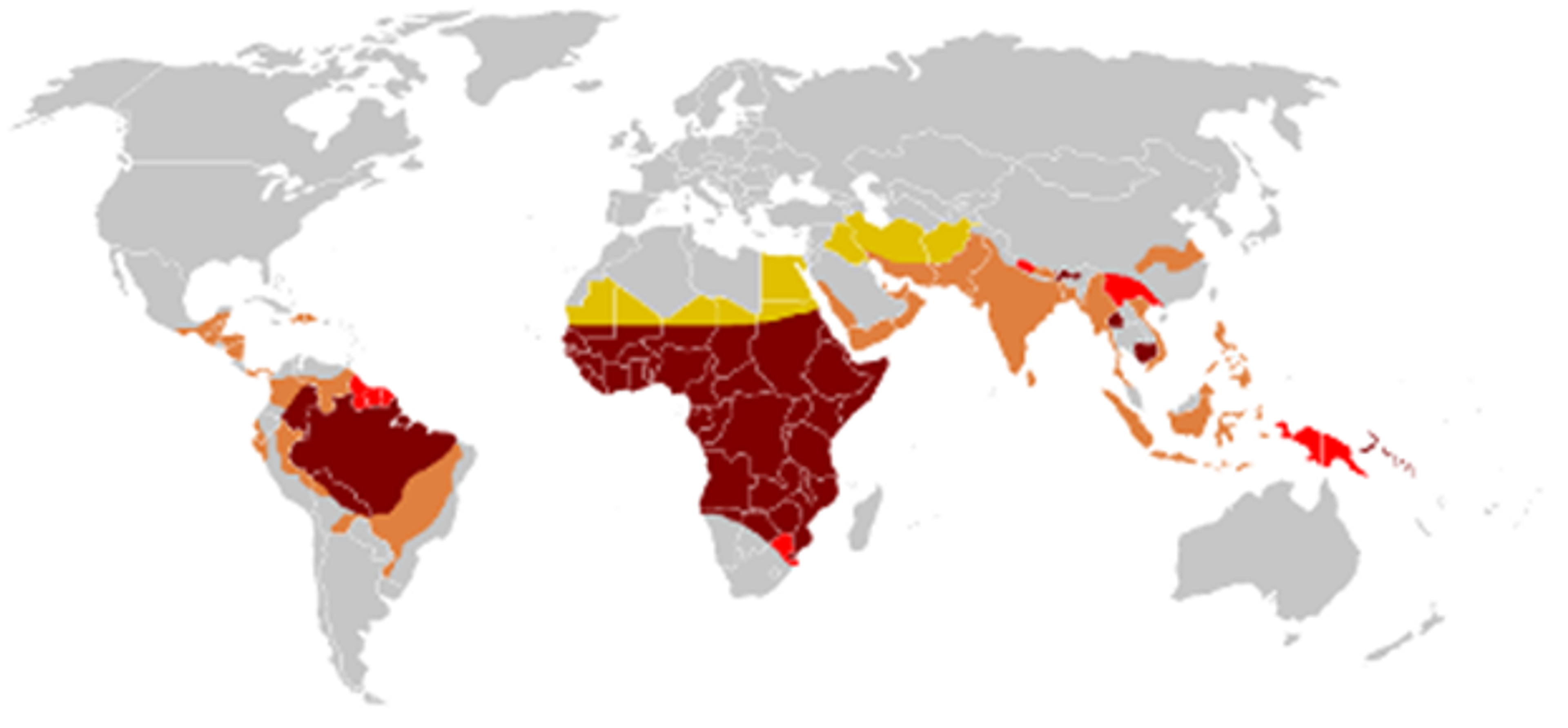
Each year, 350-500 million cases of malaria occur worldwide. More than one million people die from malaria each year.
Cost-effectiveness
Key interventions to control malaria include: prompt and effective treatment with artemisinin-based combination therapies, use of insecticidal nets by people at risk, and indoor residual spraying with insecticide to control the vector mosquitoes.
Charities that focus on malaria often advertise their cost-effectiveness in terms of how much it costs to purchase and distribute one insecticide-treated bednet.
Malaria interventions can be very cost-effective. The against Malaria foundation distributes long-lasting insecticide-treated mosquito net for about $6 per net. According to some calculations, it only costs about $3,340 to enable 34 years of healthy life that would otherwise been lost. This is equivalent to saving a life.
Other information
Are there side effects?
One possible negative side effect is:
- Malaria develops resistance to drug treatment. However, this resistance is taken into account in the above cost-effectiveness estimates for household spraying and case management.
Conclusion
Tackling malaria is a highly cost-effective intervention in the developing world. Of the many malaria charities, we can particularly recommend Against Malaria Foundation. Please see our page of Recommended Charities for more information.
Sources:
Last updated: in or before 2012