







I'm already giving significantly. Why should I take a pledge?
The 🔸10% Pledge
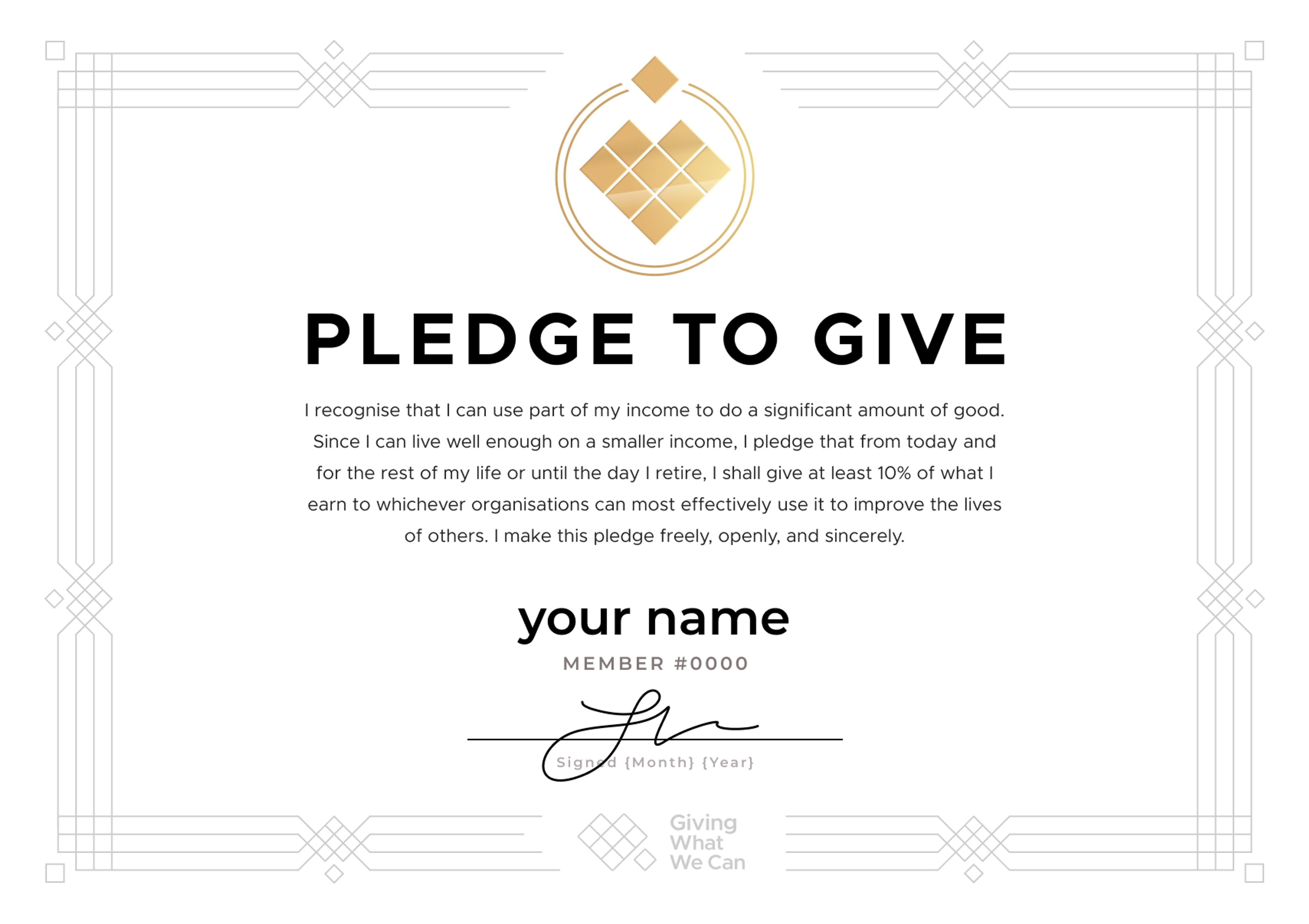
A simple idea that started a global movement. Our most popular pledge, the 🔸10% Pledge, is a public commitment to give at least 10% of income to the organisations you believe can most effectively use it to improve the lives of others.
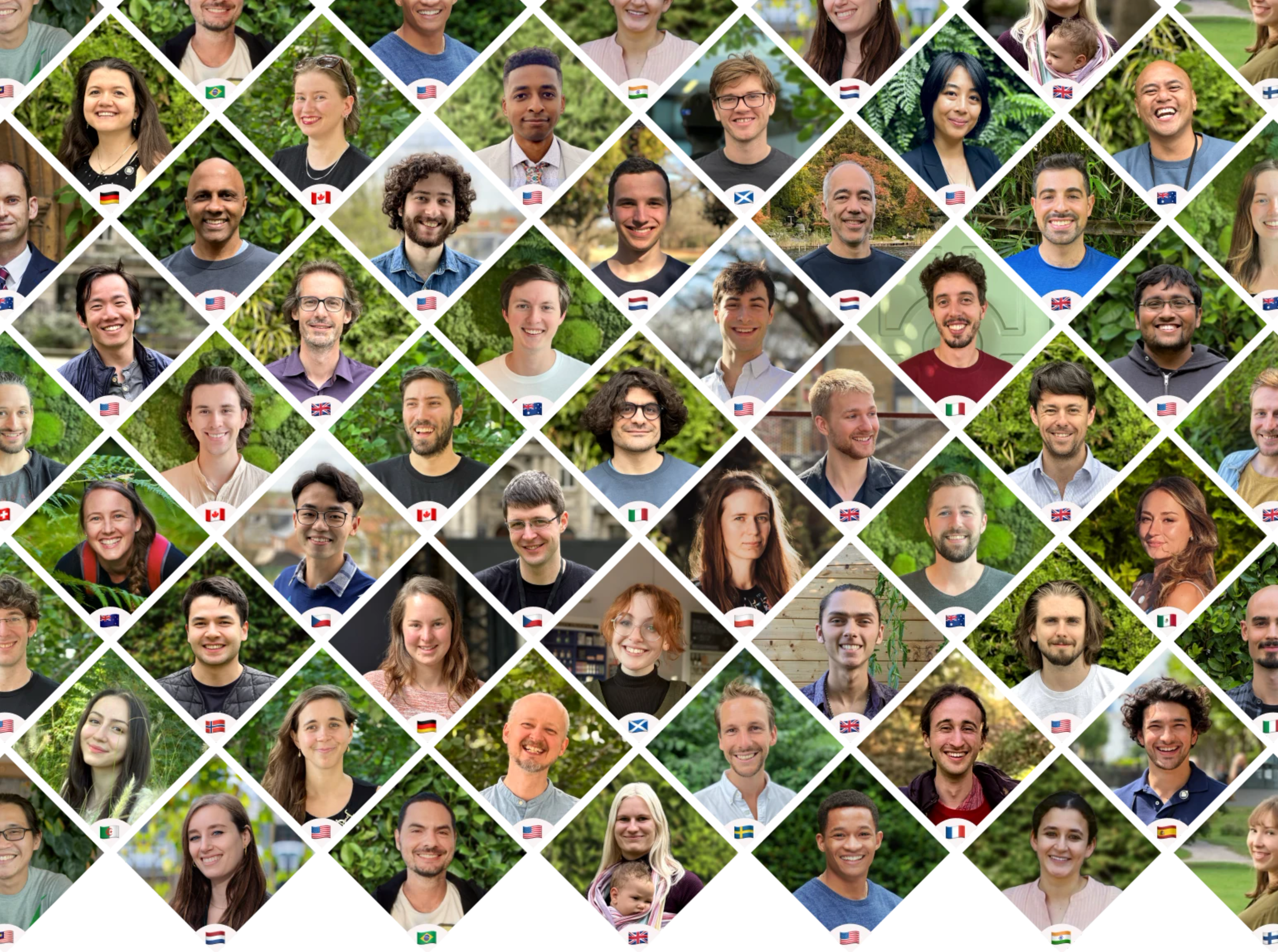
Why would 11,211 people from 118 countries pledge to donate 10% of their income to effective charities?
A lot of reasons, but many simply realised:
1
If you earn at least 47,000 USD (post tax) per year, you are in the richest 2% globally.
Ten percent seems like a lot until you realise that in most cases, you’ll still be in the top richest income percentile even after donating it!
2
You can have 100x more impact by donating to the most effective charities (seriously, 100x!)
Ten percent seems like a lot until you realise just how much it can help others in the right hands.
3
If everyone stepped up in this way, we could legitimately reshape the world.
Ten percent seems like a lot until you realise you’re not alone, and together – we can do incredible things.
hear Akhil's story
hear Catherine's story

See the impact that your pledge could have
What if the top 1% all donated 10%?
What could we accomplish?

In just two years, we could use the 3.6 trillion dollars to:
$258 B
End extreme poverty for at least a year
$297 B
Build the systems we need to prevent pandemics
$662 B
2x all clean energy R&D funding
$6 B
4x philanthropic funding for nuclear security
$1.5 B
Dramatically increase funding for AI safety
$1.22 T
Clean water & sanitation for all
$341 B
End hunger & malnutrition
$175 B
Dramatically expand access to reproductive care
$219 B
Massively suppress malaria, tuberculosis and HIV
$53 B
Massively suppress or eradicate most NTDs
$222 B
Halve factory farming
REMINDER
Anyone earning US$65k a year post-tax is in that top 1%!
If you live in a wealthy country, you might not realize just how wealthy you are. Most people living in wealthy countries (US, UK, AUS, etc.) are in the top 5% of income earners worldwide even after accounting for increased purchasing power in lower-income countries. Learn more
Help our community reach 12,000 🔸10% pledgers
We’re changing the norms around charitable giving. By publicly committing to dedicate a portion of your resources to help others, you’ll inspire more people to do the same.
11,211
🔸10% Pledgers
12,000
Goal
Join 11,211 others who have pledged
Take the pledgeHow does the 🔸10% Pledge work?
The 🔸10% Pledge is a public commitment to give a percentage of your income or wealth to organisations that can most effectively help others.
- You choose the charities and report and track your giving on your personal pledge dashboard.
- We show you your giving history, connect you with other pledgers, and report on our impact as a global community of people committed to creating a better world.
Take the pledge Remind me later
Not ready for 10%?
If you’re not ready to fully commit, you can try our 🔹Trial Pledge which allows you to try giving any percentage for a custom duration — you decide!
Why 10% of income?
What do we mean by “effective”?
What if I’m a student? What if I’m not earning income?
What is “wealth” and how can I include it in my pledge?
Is a giving pledge legally binding?
Why give publicly?
Why am I seeing the small orange diamond emoji on social media?
What do we mean by pledging to donate to “effective” charities?
Not all charities are equal. Your choice of where to donate can lead to significant differences in impact. Some charities can easily do 100 times more good with your dollar than others, and often this multiplier is even greater. Giving around $200 USD per month to the charities recommended by GiveWell, for example, could save someone's life every two years.
What charities can I give to? You can give to any charities you sincerely believe are the most effective at using their resources to improve the world. However, since charities vary dramatically in how much good they do per dollar, we recommend checking out our giving guides when deciding where to give.

Pledge options
Unsure what to pick? Check out our pledge recommendation tool.
__%
of income
1,643
The 🔹Trial Pledge
Give a minimum of __% of your income for __ years.
You choose what % of income or what % of wealth you want to pledge and for how long (6 months - 5 years).
10%
of income
11,211
The 🔸10% Pledge
Give a minimum of 10% of your income, until you retire.
Give 10% of your income. You can also pledge a % of wealth (suggested at 2.5%), if that makes sense for you.
$__
allowance
22
The Further Pledge
Give all income over a set allowance, until you retire.
You choose how much you need to live a good life and give away everything above that allowance.
Pledges aren't just for people
Your company can have a tremendous impact by pledging a percentage of profits to highly-effective charities. Some of our proud company pledgers are highlighted below; join them to set an example for others! Drop us a line to learn more and get started.
10%
of profits
The Company Pledge
Give 10% of your profits
Give at least 10% of profits each year to highly-effective charities.
Join the 11,211 individuals who are living up to their values. Take the pledge today or sign up to learn more.
A global movement
Initiated by Giving What We Can in 2009 (as the “Giving What We Can Pledge”), the 🔸10% Pledge is now a widespread way to effect change. Take it here at Giving What We Can or through any of the organisations below.

School for Moral Ambition
The School for Moral Ambition is an organisation that seeks to address talent bottlenecks by inspiring and equipping ambitious individuals to pursue high‑impact careers tackling the world’s most pressing, solvable challenges.
Effektiv Spenden
Effektiv Spenden works to communicate ideas related to effective altruism and effective giving to German-speaking audiences.
Ayuda Efectiva
Ayuda Efectiva works to communicate ideas related to effective altruism and effective giving to Spanish-speaking audiences.

Benefficienza
Benefficienza works to communicate ideas related to effective altruism and effective giving to an Italian audience
Ge Effektivt
Ge Effektivt works to communicate ideas related to effective altruism and effective giving to a Swedish audience.
Gi Effektivt
Gi Effektivt works to communicate ideas related to effective altruism and effective giving to a Norwegian audience.
Giv Effektivt
Giv Effektivt is a Danish organization that identifies and promotes highly effective charitable causes.

Mieux Donner
Mieux Donner helps donors make informed decisions to maximise the effectiveness of their contributions and create meaningful positive change.
Giving Confidence
Let’s address your questions
Step 1 of 2
Pledge FAQs
Should everyone take a giving pledge?
How do I decide which pledge to take?
What if I want to give more than 10% of my income?
Is the income Pledge based on pre-tax income or post-tax income?
Is a giving pledge legally binding?
What is “wealth” and how can I include it in my pledge?
How permanent is a giving pledge?
What should I think about before taking a pledge?
Does volunteering count towards my giving pledge?
How does debt change my giving pledge?
I'm not sure about becoming a member yet, but would like to help. What can I do?
Do I count employer donation matching towards my giving pledge?
How do I calculate my pledge if I’m unemployed?
How do you keep track of whether I follow through on my commitment?
What organisations or charities ‘count’ towards a giving pledge?
How do I calculate my pledge if I’m a full-time parent or carer?
Can I report donations to any charity using the Pledge Dashboard?
Is the Pledge until retirement or for the rest of your life?
Can I take a pledge now, but start it at a future date?
What happens if I acquire a disability and am no longer able to work?
What is the Pledge?
Why is the 🔸10% Pledge 10%?
What’s the small orange diamond emoji 🔸?
How can I resign or unpledge for my pledge?
What if I can't afford to give 10% of my income?
Could I become a member and not have my name published?
How do I upgrade my existing pledge to include wealth?
Is a 🔸10% Pledge with wealth a lifetime commitment?
What are the different giving pledge options?
Why are the names of pledged members made public?
How often should members donate?
Can I pledge with my partner as a couple?
How do I calculate my pledge if I’m retired?
How does working at a nonprofit or charity change my pledge?
Is there a pledge for students?
Does Gift Aid count toward my pledge?
How do I calculate my pledge if I’m a student?
How do I view my pledge progress or report donations on my Pledge Dashboard?
How do I use the pledge recommendation tool if I'm retired, a student, or unemployed?
Can I request a new pledge certificate?